


News
Email Marketing Best Practices: How to Drive Engagement, Leads, and ROI

One of the biggest mistakes a business can make is going silent. Whether facing economic uncertainty, increased competition, or shifting market conditions, reducing visibility often leads to reduced opportunities. Instead, organizations should strengthen their digital marketing efforts to stay connected with customers, reinforce brand awareness, and position themselves as trusted industry leaders.
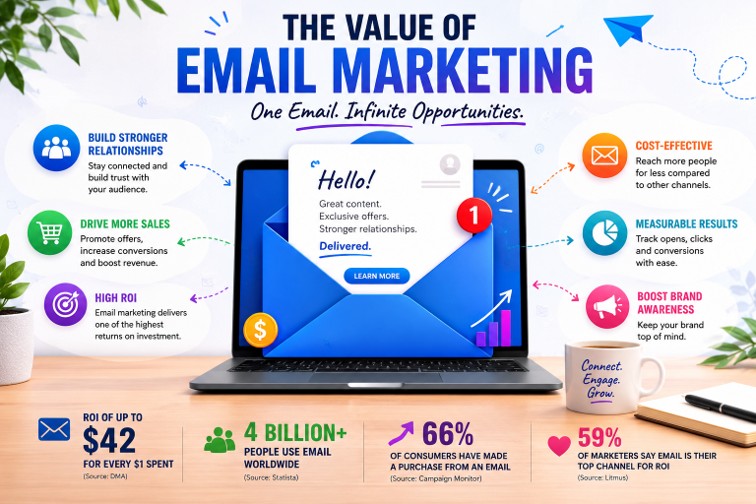
Among all digital marketing channels, email marketing continues to deliver one of the highest returns on investment. It provides a direct line of communication to prospects and customers, supports lead nurturing, generates valuable engagement data, and helps drive measurable business results.
If you’re looking to improve your email marketing performance, these best practices can help maximize engagement, conversions, and ROI.
Choose the Right Email Marketing Platform
The foundation of a successful email strategy starts with selecting the right platform. Today’s solutions range from user-friendly email tools to sophisticated marketing automation systems.
Popular options include Mailchimp, Constant Contact, HubSpot, Salesforce Marketing Cloud Account Engagement, and ActiveCampaign. The right choice depends on your business goals, budget, database size, and automation requirements.
While basic platforms may be sufficient for sending newsletters and announcements, organizations focused on lead generation and customer retention often benefit from advanced automation features such as:
- Lead nurturing workflows
- Behavioral triggers
- Dynamic content
- CRM integration
- Advanced reporting and analytics
Selecting a platform that can grow with your organization can save significant time and expense in the future.
Design for Mobile First
More than half of all emails are opened on mobile devices, making mobile optimization essential rather than optional.
Every email should utilize responsive design principles to ensure a seamless experience across:
- Smartphones
- Tablets
- Laptops
- Desktop computers
Keep layouts simple, use readable font sizes, include sufficient white space, and make buttons large enough to tap easily. If your email isn’t easy to read on a mobile device, engagement rates will suffer.
Understand Your Audience
Successful email campaigns begin with a clear understanding of your audience.
Develop buyer personas that define:
- Industry
- Job role
- Challenges and pain points
- Goals and objectives
- Purchasing behaviors
The better you understand your audience, the more relevant and personalized your messaging becomes. Relevance drives engagement, and engagement drives results.
Prioritize Data Quality and Segmentation
Your email marketing performance is only as strong as your database.
Maintaining accurate, up-to-date contact information improves deliverability and reduces bounce rates. Regularly clean your database by removing inactive contacts, correcting inaccuracies, and updating outdated information.
Segmentation is equally important. Rather than sending the same message to everyone, divide your audience into meaningful groups based on factors such as:
- Industry
- Geographic location
- Product interest
- Purchase history
- Customer lifecycle stage
- Engagement level
Segmented campaigns consistently generate higher open rates, click-through rates, and conversions.
Create Subject Lines That Earn Opens
Your subject line determines whether your email gets opened or ignored.
An effective subject line should:
- Capture attention quickly
- Clearly communicate value
- Create curiosity
- Remain concise
Aim for approximately 30-50 characters whenever possible to ensure visibility across devices.
Avoid clickbait tactics or misleading language. Today’s recipients quickly recognize and ignore promotional messages that fail to deliver on their promises.
Deliver Relevant, Valuable Content
Once your email is opened, the content must immediately demonstrate value.
Focus on addressing your audience’s needs rather than simply promoting your products or services. Consider providing:
- Industry insights
- Educational resources
- Best practices
- Case studies
- Product updates
- Customer success stories
Use clear, action-oriented language and communicate benefits rather than features. Every email should answer the recipient’s question: “What’s in it for me?”
Keep Emails Concise and Scannable
Attention spans are limited, and inboxes are crowded. The most effective emails are often the simplest.
Best practices include:
- Short opening paragraph
- Bullet points for key information
- Clear section headings
- Limited visual clutter
- One primary call-to-action
Most recipients scan emails before deciding whether to engage further. Make important information easy to find and easy to consume.
Personalize Beyond First Names
Modern personalization extends far beyond inserting a first name into the greeting. Today’s email platforms allow organizations to personalize content based on:
- Industry
- Location
- Previous purchases
- Website behavior
- Content interests
- Lifecycle stage
Relevant personalization helps create more meaningful customer experiences and significantly improves engagement rates.
The goal is to make every recipient feel that the message was designed specifically for them.
Include a Clear Call-to-Action
Every email should have a purpose. Whether you want recipients to:
- Download a resource
- Schedule a consultation
- Register for an event
- Request a quote
- Visit your website
Your call-to-action (CTA) should be obvious, compelling, and easy to find. Use action-oriented language such as:
- Download the Guide
- Schedule a Demo
- Learn More
- Request a Consultation
- Get Started Today
Avoid overwhelming recipients with multiple competing CTAs. A single, focused objective typically performs best.
Send Emails from a Real Person
Trust remains a critical factor in email engagement. Emails sent from a recognizable individual often outperform messages sent from generic company addresses.
Consider sending emails from:
- A company executive
- A sales representative
- A customer success manager
- A marketing team member
Personal sender names create familiarity and encourage recipients to view the email as a genuine communication rather than a mass marketing message.
Test Before Every Send
Even small errors can negatively impact campaign performance. Before launching any campaign:
- Preview emails on multiple devices
- Test links and buttons
- Verify images display correctly
- Check formatting across email clients
- Review personalization fields
- Proofread content carefully
Most modern email platforms provide testing tools that make this process simple and efficient.
Use Analytics to Continuously Improve
One of the greatest advantages of email marketing is its measurability. Monitor key performance indicators such as:
- Open rates
- Click-through rates
- Conversion rates
- Unsubscribe rates
- Bounce rates
- Revenue generated
Use A/B testing to evaluate subject lines, content formats, send times, and calls-to-action. Small improvements compounded over time can significantly increase campaign effectiveness.
Email Marketing Remains One of the Highest-Performing Marketing Channels
Despite the growth of social media, AI-powered search, and digital advertising, email marketing remains one of the most effective ways to build relationships, nurture leads, and drive revenue.
Organizations that invest in quality content, audience segmentation, personalization, and marketing automation consistently achieve stronger engagement and better business outcomes.
Whether your goal is increasing brand awareness, generating qualified leads, or improving customer retention, a strategic email marketing program can deliver measurable results and long-term value.
Need help improving your email marketing performance? A well-executed strategy can help increase engagement, improve click-through rates, reduce unsubscribes, and generate more qualified opportunities for your business.
